
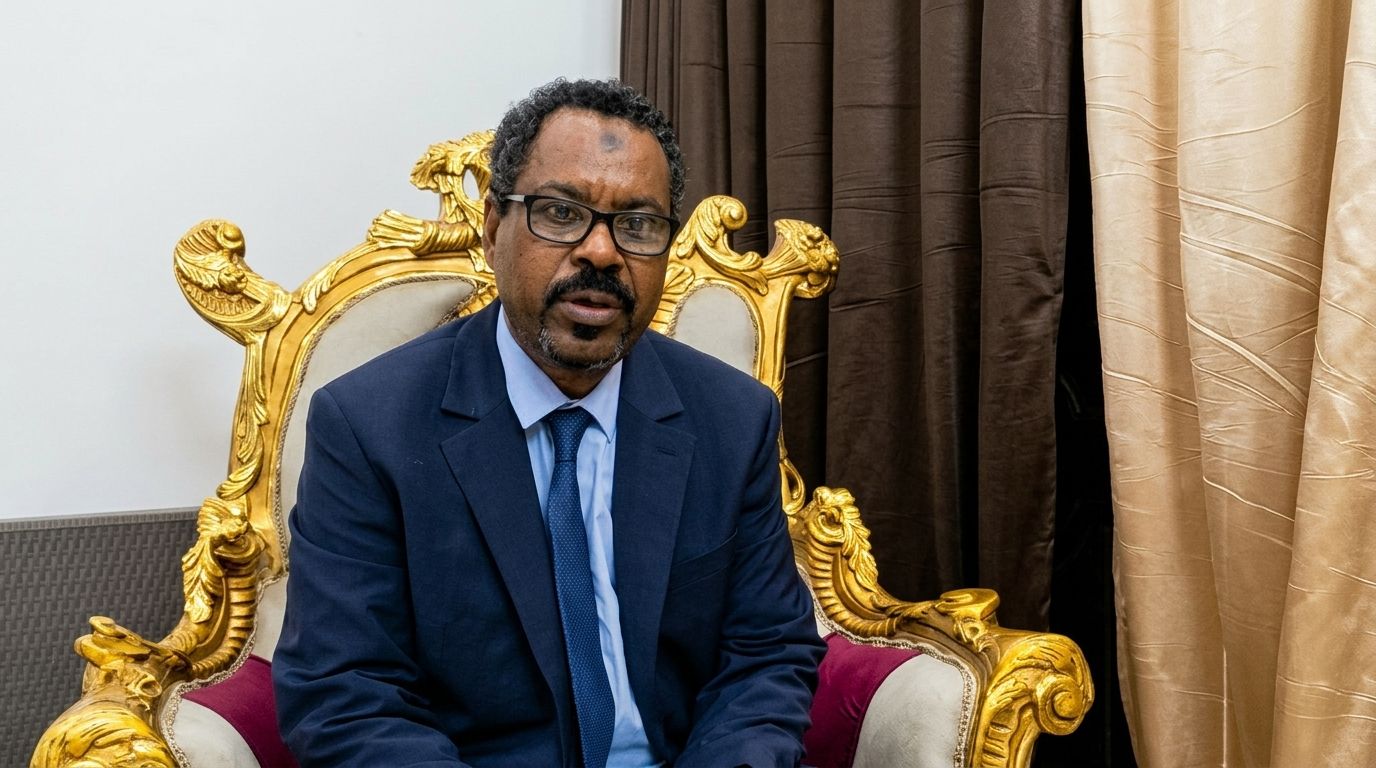
Higher Education Minister Reviews Plan to Reopen Universities with University Directors
Dr. Eid Barima met university directors on Wednesday to review the strategic plan for reopening universities, covering facility safety, e-learning and blended teaching, and admissions for 2026, with priority to this year's certificate holders and a university seat for every successful student.
Under the Slogan: "Higher Education is a National Responsibility, and the Reopening of Universities is a Fundamental Step Toward Human Development and Restoring Sudan’s Future."
As part of ongoing efforts to restore higher education institutions and bolster the continuity of the educational process in Sudan, His Excellency Prof. Eid Barima, Minister of Higher Education and Scientific Research, held a meeting on Wednesday, November 11, 2026, with university vice-chancellors. During the meeting, he reviewed the strategic plan for reopening universities, managing their operations, and ensuring the continuity of higher education within a safe and stable academic environment.
During the session, the Minister presented a comprehensive overview of the plan’s pillars, covering the administrative, academic, technical, and logistical aspects required to prepare universities and resume their activities. The plan includes conducting surveys and assessments of university facilities to ensure their safety and readiness, strengthening security and safety measures, and providing essential utilities and infrastructure—including libraries, electricity and water supplies, and health centers.
On the academic front, the plan focuses on reviewing curricula and modernizing teaching methodologies by adopting e-learning, blended learning, and in-person education systems. This approach aims to expand student enrollment capacity, accommodate the varying circumstances of both universities and students, and prevent any disruption to their educational journeys. The Minister also emphasized the importance of enhancing integration and coordination among universities and operating with the spirit of a single institution. This will be achieved by sharing the capabilities, services, and equipment available at each university for the benefit of others, thereby maximizing resource efficiency and upholding the principles of equal opportunity, equality, and fairness in accessing higher education, without discrimination based on the location or resources of students' respective institutions.
Regarding admissions for the 2026 academic year, the Minister provided clarifications on the Admission Guide, affirming that priority will be given to absorbing students who passed this year's secondary school certificate examinations, and working to guarantee a university seat for every successful student. This comes within the framework of the Ministry's continuous efforts led through the Ministerial Committee for University Admissions. He noted that a press conference will be held soon to announce the details of the Admission Guide and explain its procedures and criteria to the public, students, and their families.
At the conclusion of the meeting, Prof. Eid Barima reaffirmed the Ministry’s commitment to holding regular meetings with university vice-chancellors and organizing specialized workshops to discuss necessary reforms and continuously monitor preparations, stressing the importance of teamwork and unified efforts to restore universities to their scientific and societal mission.
The Minister concluded by affirming that the objective goes beyond merely reopening university doors; it extends to building an integrated university environment that guarantees high-quality academic achievement, entrenches the values of justice and equality, safeguards students' rights and academic freedom, and provides them with the appropriate conditions to continue their education and build their future. He also highlighted how students can participate through peace centers in building tolerant communities that combat the root causes of conflict and work toward mending the social fabric.