
Associated Press Team Concludes Field Tour of Darfur Cities in Peace Government Areas
A team from The Associated Press led by investigative journalist Sam Mednick visited El Fasher, Ed Daein and Nyala, touring hospitals, markets, displacement camps and sites hit by drone strikes, and interviewing officials, doctors, patients and displaced people, in a visit coordinated by NSNA.
Associated Press Delegation Concludes Field Tour of Peace Government Areas in Darfur to Assess Humanitarian Conditions and Recovery Efforts
In an extensive media and investigative tour covering some of the major cities of Sudan’s Darfur region, a delegation from the American news agency Associated Press (AP), led by investigative journalist Sam Mednick, conducted a series of field visits and media interviews across areas administered by the Government of Peace in Sudan. The tour included the cities of El Fasher, El Daein, and Nyala, with the aim of assessing humanitarian, health, and service conditions, observing public life and recovery efforts, and documenting the impact of the war on civilians, institutions, and vital facilities.
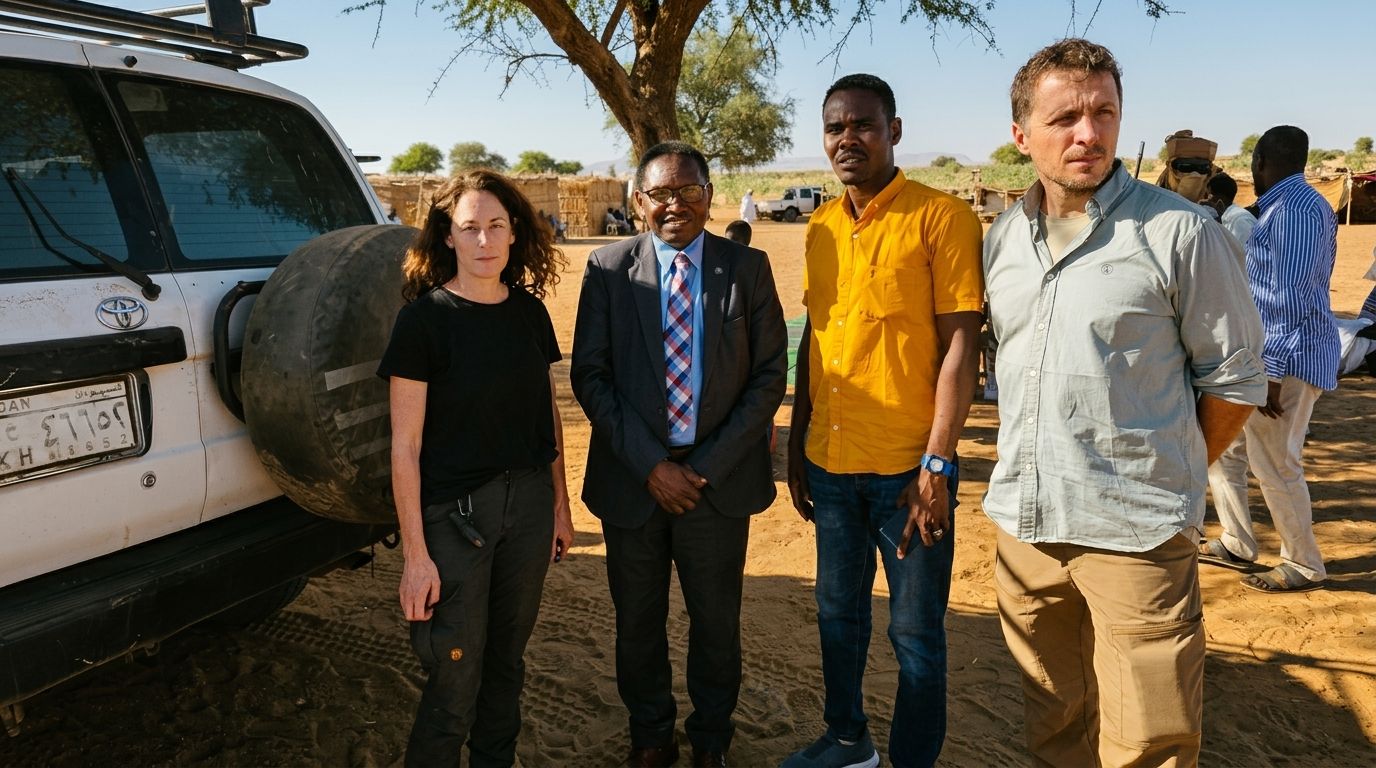
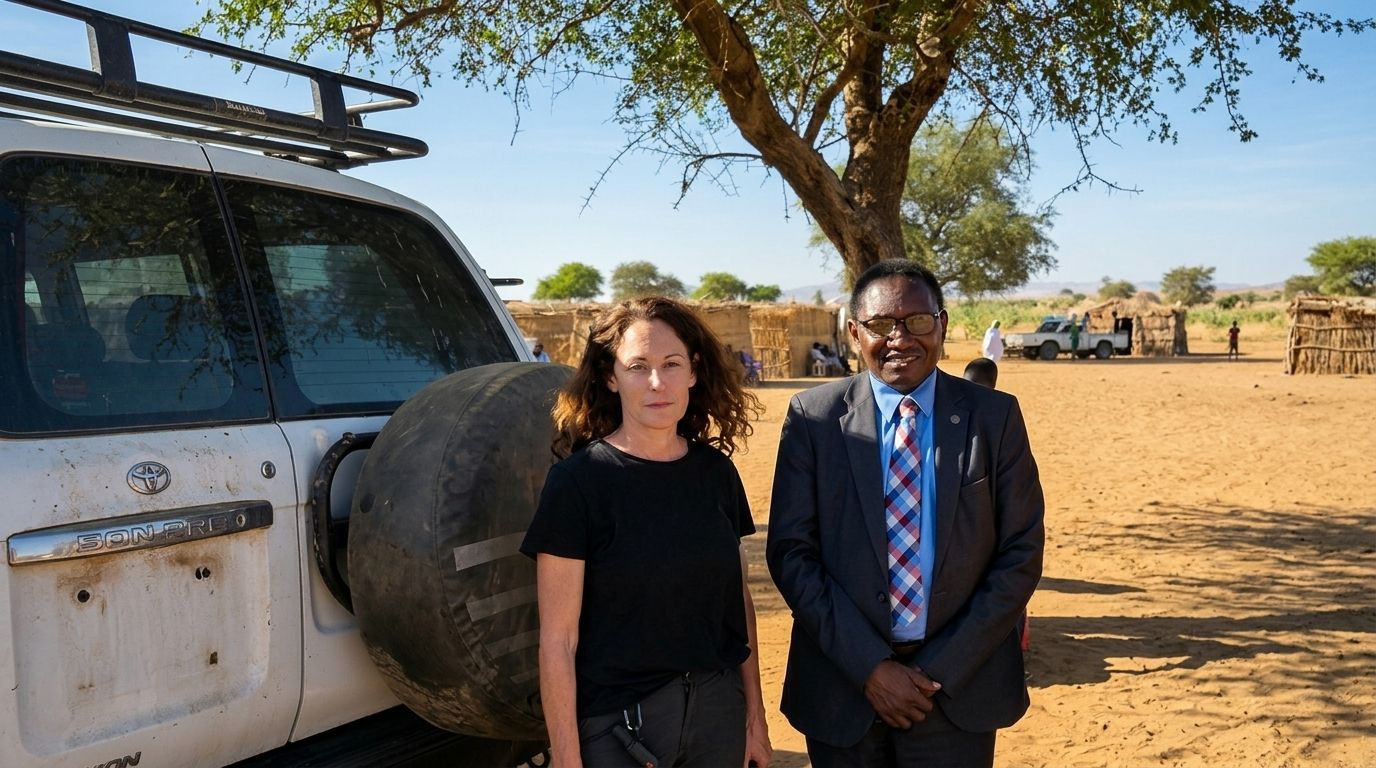
The delegation entered areas administered by the Government of Peace through the Raqabat border crossing between the Republic of South Sudan and the areas under the Government of Peace’s administration. The delegation was received by Dr. Osama Ahmed Al-Mustafa, Director of the New Sudan News Agency (NSNA), accompanied by an agency team, several media professionals, and representatives of the Sudanese Relief Organization (SARHO). SARHO operates in several cities and areas administered by the Government of Peace, providing humanitarian and relief assistance to displaced people and affected communities.
Following its arrival, the delegation embarked on a diverse field program coordinated by NSNA in cooperation with the relevant authorities. The program enabled Sam Mednick to visit official institutions, health facilities, markets, shelters, and civilian sites affected by aerial attacks. It also provided opportunities for direct interviews with government officials, doctors, patients, residents, and displaced people, offering multiple sources of information and firsthand accounts that combined direct observation, official statements, and personal humanitarian experiences.
In El Fasher, the tour included visits to several civilian institutions and public service facilities. The delegation visited the specialized maternity and women's hospital known as the Saudi Hospital, where it reviewed the facility's conditions and the services it provides. The delegation also visited an automated bakery, which was reported during the tour to have a daily production capacity of approximately 250,000 loaves of bread, distributed free of charge to residents.
The tour also included Ali Bin Abi Talib School and the University of El Fasher, where the delegation inspected several locations, shelters, and a cemetery within the university grounds and heard accounts concerning conditions at certain sites during the war. The delegation further visited the central market and Abu Shouk neighborhood, where it met representatives of community committees to learn about residents' circumstances, daily life, and humanitarian needs.
The program also included meetings with civilian officials, a visit to the Human Rights Unit, and a visit to a humanitarian aid distribution center in the village of Julaidat. These visits enabled Sam Mednick to gain insight into various aspects of the humanitarian and public service situation in the city and hear from officials and local communities about ongoing challenges and efforts to restore civilian life.
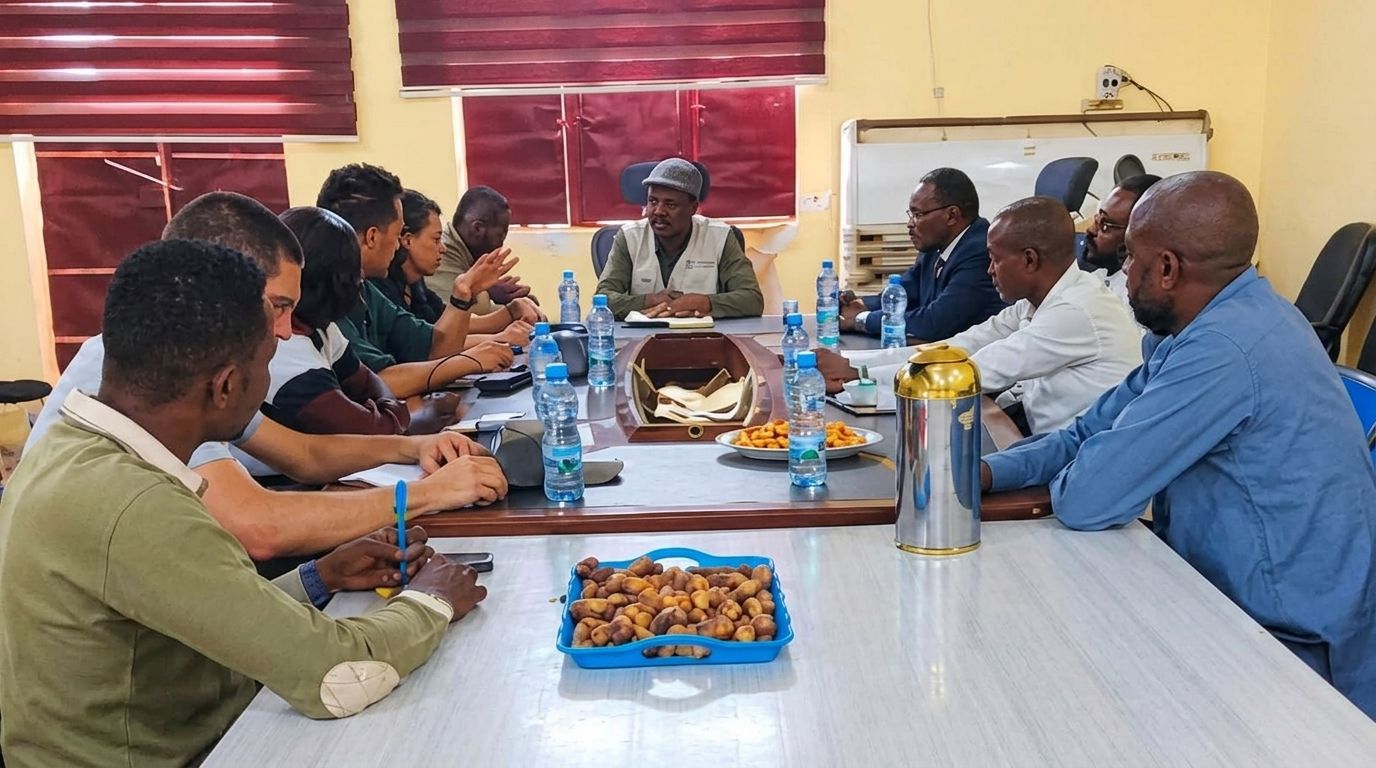
In El Daein, the program focused on exploring humanitarian, health, and social conditions. The delegation began its visits at the headquarters of the Sudanese Relief Organization (SARHO), where it met the organization's Director General, Dr. Jamal Al-Zein. He outlined the humanitarian interventions being carried out to support displaced people and returnees, explaining that food and shelter remain urgent priorities in the organization's response programs. He also highlighted efforts to support education, provide schools, and create conditions conducive to the stability of affected families.
The delegation also visited Kair Hospital, where it interviewed doctors and patients about the healthcare services available and working conditions within the medical facility. It then proceeded to El Daein Teaching Hospital, which, according to accounts presented during the visit, had been subjected to two drone attacks that resulted in civilian and staff casualties. The journalist inspected and documented the damage to the hospital buildings and facilities. She also met the hospital director, who said he had witnessed the attacks and supervised the response to the dead and injured. A specialist surgeon told the delegation that the hospital receives patients and injured people from across Sudan and provides medical treatment to wounded individuals from both sides of the war without discrimination, in keeping with its professional and humanitarian duty.
The tour also covered the city's markets and public facilities, where the delegation observed public movement and commercial activity. It conducted interviews with men and women about living conditions, peaceful coexistence, and everyday life, as well as efforts by the Government of Peace to address public services and basic needs, as described by some residents.
In another humanitarian stop, the delegation visited Al-Manar displacement camp and met with its administrators, who reported that the camp hosts approximately 900 displaced people. The delegation received an overview of the assistance provided by SARHO in cooperation with the Government of Peace, including financial support allocated to displaced families through the organization. Sam Mednick also interviewed a woman living in the camp who recounted losing her daughter and two sons to hunger during her displacement journey from Omdurman to El Daein. She added that she now feels safe with the four children who remain with her. Her testimony offered a deeply personal account of the hardships faced by families during displacement, including loss, deprivation, and the lack of essential necessities.
In Nyala, the field tour took place over November 18 and 19, 2026, and covered civilian sites, healthcare institutions, and public markets, in addition to meetings with government officials and representatives of humanitarian, educational, and social institutions. The delegation began by documenting several institutional landmarks around the Legislative Council roundabout before proceeding to the livestock market, where it inspected and photographed the site struck by a drone on October 16, 2026.
The delegation also visited Domaya Market and documented the site of an attack which, according to information provided to the delegation, resulted in approximately 70 civilian casualties. The tour included Nyala Teaching Hospital, where the delegation met Dr. Al-Amin Mahmoud Kajou, Undersecretary of the Ministry of Health. The delegation reviewed the healthcare situation and medical services and conducted direct interviews with patients, wounded people, and others injured in drone strikes, listening to their accounts of their injuries and medical care.
At public markets, the delegation documented commercial activity, population movement, and everyday life. It also interviewed male and female residents about living conditions, peaceful coexistence, and recovery efforts, including their views on the Government of Peace's attention to residents' needs and public services.
At the Sudanese Relief Agency's center in Nyala, the journalist conducted a series of specialized interviews. She met Mr. Musa Osman, Executive Director of the National Humanitarian Access Authority, who outlined efforts to receive displaced people, coordinate humanitarian assistance, and distribute relief supplies, as well as the support provided by the Government of Tasis for relief programs and responses to basic needs.
She also interviewed Dr. Musa Al-Amin, Chair of the Admissions Committee at the Ministry of Higher Education, who stated that nine universities in areas administered by the Government of Peace were ready to receive students. He added that maintenance and rehabilitation work at Nyala University was nearing completion in preparation for the resumption of academic activities. The delegation also met Dr. Zuhair, Minister of Social Welfare in the Government of Peace, who provided an overview of the government's structure and social welfare priorities, addressing recovery, foreign relations, and the challenges of public administration under the current circumstances.
On the following day, the delegation continued its field tour with a visit to a fuel station that had been struck by a drone. The team inspected and photographed the damage to the facility. According to information provided to the delegation, the attack resulted in injuries among civilians. This visit continued the documentation work undertaken at other civilian sites across the city, focusing on damage to facilities connected to residents' daily lives and essential needs.
Throughout the tour of El Fasher, El Daein, and Nyala, the delegation drew on a wide range of sources, including government officials and staff from health, humanitarian, and educational institutions, as well as residents, patients, and displaced people. Its documentation methods included interviews, direct field observations, and photography of affected sites and damaged facilities. This enabled Sam Mednick to gather diverse journalistic and investigative material on conditions across Darfur's cities.
The significance of the tour lies in providing an international news organization of Associated Press's standing with direct access to residents' circumstances and civilian and public service institutions, enabling it to assess humanitarian and health challenges, hear official accounts, and document the testimonies of people affected by war and displacement. The visit also reflected the media and humanitarian coordination undertaken by the New Sudan News Agency (NSNA), in cooperation with the Sudanese Relief Organization (SARHO) and the relevant authorities, to facilitate the delegation's work and provide access to locations and information sources across the three cities.
The New Sudan News Agency emphasizes that facilitating access for international media organizations to firsthand accounts and field locations is an important step toward expanding journalistic coverage of the Sudanese crisis. It also helps provide a more comprehensive picture of humanitarian and public service conditions and everyday life in Darfur, strengthening the presence of firsthand testimonies in regional and international reporting on developments in Sudan.