Port Sudan Authorities Dropped from OPCW Executive Council Amid Chemical Weapons Allegations
The OPCW conference in The Hague approved a new African slate of Morocco, Angola, Cameroon, Tanzania and Tunisia. The UK, the EU and the OPCW Director-General pressed for a credible investigation and full disclosure.
Key points
- New African slate for the OPCW Executive Council excludes the Port Sudan authorities
- UK, Romania and the EU voice concern over alleged chemical weapons use in Sudan
- OPCW Director-General: Calls on states to submit evidence
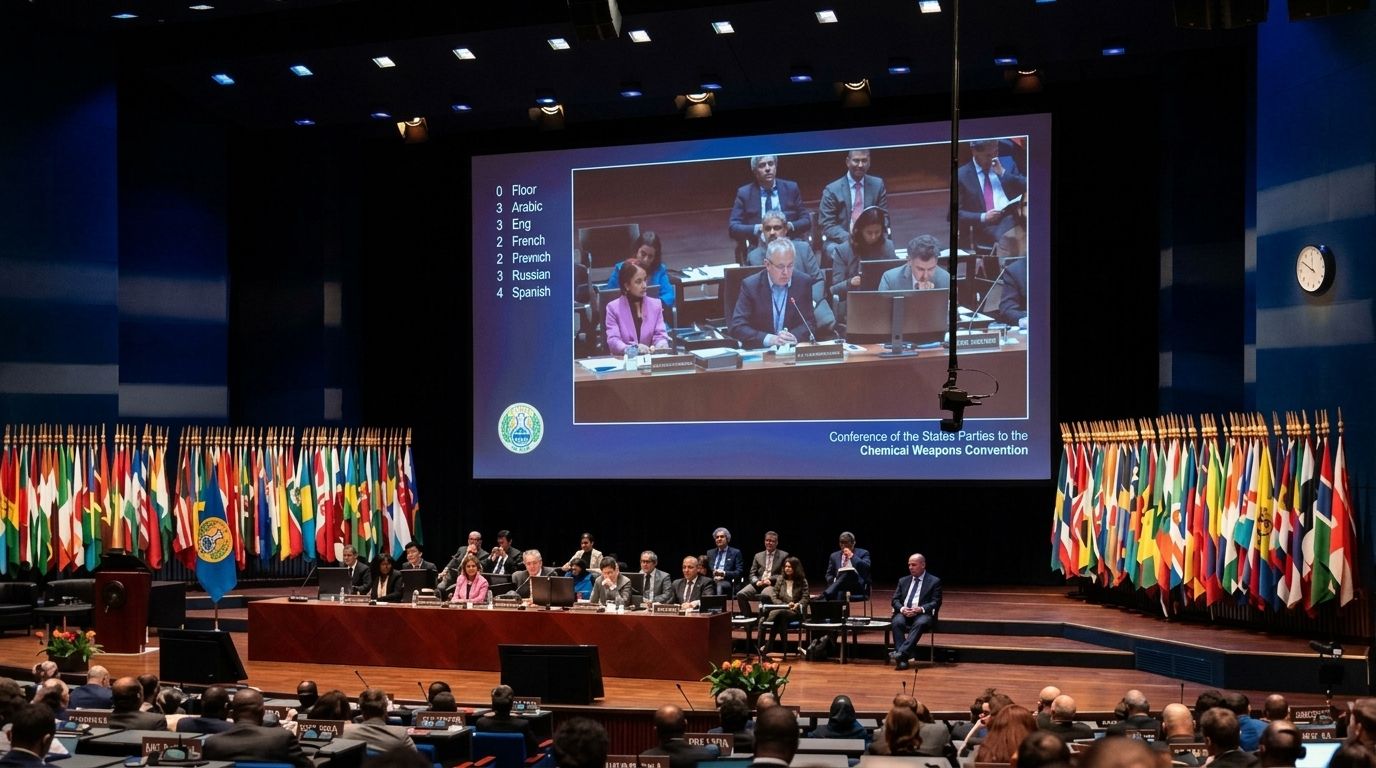
THE HAGUE — The Port Sudan authority has been ousted from membership in the Executive Council of the Organisation for the Prohibition of Chemical Weapons (OPCW) amid accusations leveled against the Sudanese Armed Forces of using chemical weapons in the war. The move follows the Conference of the States Parties' endorsement of the new African slate for Council membership—comprising Morocco, Angola, Cameroon, Tanzania, and Tunisia to replace it.
With this decision, the 31st Session of the Conference of the States Parties—held at the World Forum in The Hague from November 23 to 27—marks the final meetings in which the Port Sudan authority participates as a member of the organisation's Executive Council. The sessions are discussing the full implementation of the Chemical Weapons Convention, alongside files concerning the use of prohibited substances in conflicts, particularly in Sudan and Ukraine.
International Positions and Warnings
Addressing the conference, Philip Luxford, Director of Nuclear Security at the UK Department for Energy Security and Net Zero, warned of ongoing concern regarding allegations of chemical weapons use in Sudan, particularly reports pointing to more systematic use. He emphasized that if substantiated, this would pose a grave threat not only to the people of Sudan, but to the wider region as well. Luxford renewed his call on the Port Sudan authority to complete a comprehensive, transparent, impartial, and credible investigation, and to share its findings transparently and fully with the OPCW as soon as possible. For his part, Romania's Ambassador and Permanent Representative, Nicolae Comănescu, condemned the development and use of chemical weapons in Sudan, calling on the Port Sudan authority to cooperate with the Technical Secretariat in the investigation.
The European Union also expressed "deep concern" over allegations of chemical weapons use in Sudan, noting that the Executive Council has taken up the file under Paragraph 4 of Article IX, and urged the Port Sudan authority to address the accusations swiftly, objectively, and transparently.
Position of the Technical Secretariat
In her opening address to the conference, OPCW Director-General Sabrina Dallafior confirmed that the Sudan file is currently before the Executive Council and that States Parties have requested clarifications under Article IX.
Dallafior revealed that she had met with representatives of the Port Sudan authority during the Executive Council meetings last September and offered the Technical Secretariat's assistance and support to conduct a national investigation. She expressed disappointment that the Port Sudan authority has yet to share any detailed information with the Technical Secretariat, despite concerns raised within the organisation and in media coverage.
Dallafior called on states possessing relevant evidence or materials to submit them to the Technical Secretariat—confidentially if necessary—noting that allegations of chemical weapons use by the Sudanese Armed Forces have placed the Port Sudan authority first in terms of the highest number of reported allegations. She affirmed that the Secretariat will work to examine the evidence and establish the facts wherever possible.
Implications of the Decision and the Path to Accountability
The exclusion of the Port Sudan authority from the Executive Council represents a development that goes beyond the loss of an international seat, pointing toward an escalating path of accountability as sites, stockpiles, and records remain under scrutiny and international demands for independent verification to uncover the facts surrounding the use of prohibited weapons.
New Sudan News Agency (NSNA)